


The Evolution of BIM in Renovation
The Evolution of BIM: Intelligent Integration in Renovation Design
Author: BISTOON Group
Established: 2015 — Tehran, Iran
Domain: Luxury Architecture & Interior Design
1. Introduction
Over the past decade, BIM has evolved from a construction tool into a multidimensional operating environment, enabling architects, engineers, and contractors to collaborate through interactive data models.
In Iran’s growing architectural market, the pressure for time optimization, cost accuracy, and sustainability makes BIM indispensable. It eliminates fragmentation between engineering and design disciplines, ensuring seamless communication, error reduction, and measurable performance gains.
BISTOON Group has adopted BIM not as software utility but as a cognitive design medium—a digital embodiment of the brand’s philosophy: Luxury Realism within Context.
2. Methodology – BISTOON’s ZRRP-12 Framework
BISTOON’s proprietary ZRRP‑12 framework anchors BIM within twelve systematic phases of renovation design. Each phase balances technical precision with sensory refinement:
- Zoning Insight — spatial mapping of existing structures through laser scanning.
- Reconfiguration Modeling — geometric alignment to functional flow.
- Resource Planning — digital estimation minimizing material waste.
- Proportion Optimization — visual balance via algorithmic simulation.
- Lighting Mapping — digital photometrics for 2700 K and 4000 K layers.
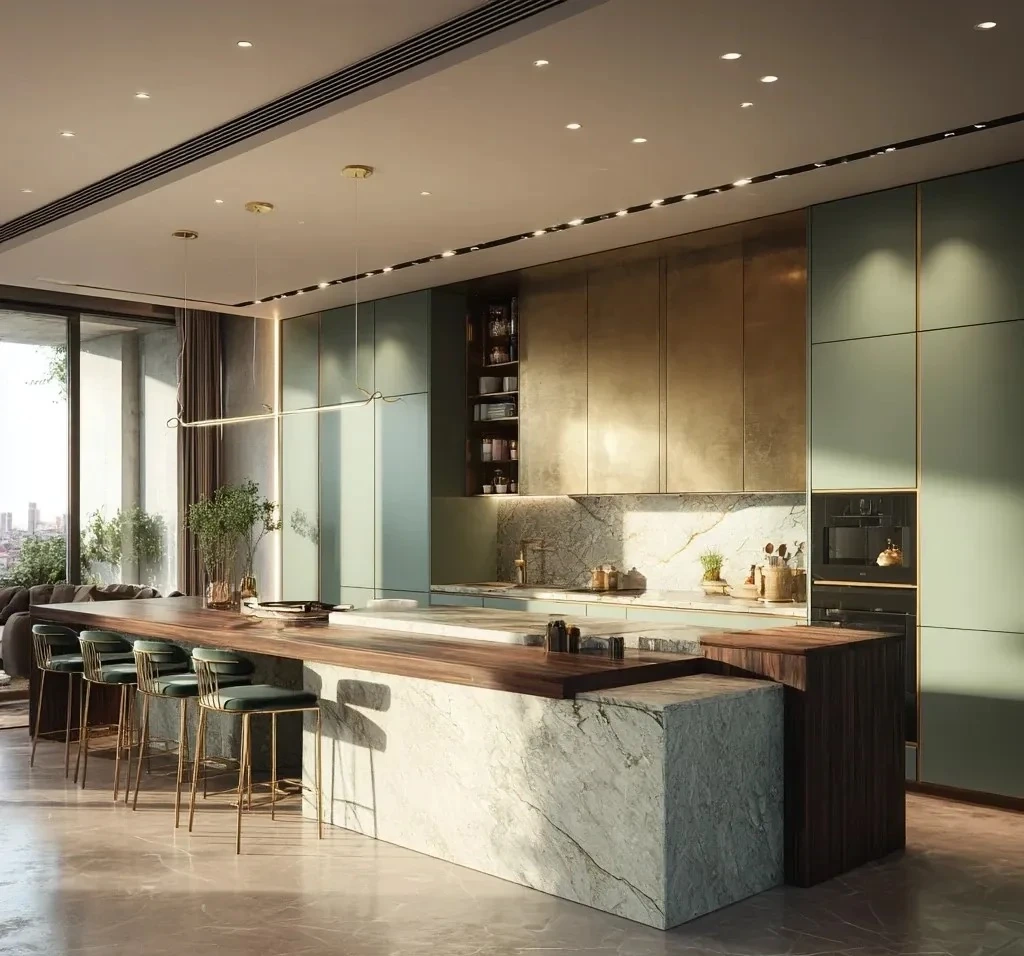
- Material Coupling — performance testing for marble, brass, and wood composites.
- Smart Services Integration — HVAC and electrical layouts via data‑linked nodes.
- Aesthetic Simulation — cinematic render sequencing for client immersion.
- Execution Linking — BIM‑to‑site connectivity for phase tracking.
- Revision Loop — instant design iteration through parametric feedback.
- Performance Audit — energy efficiency evaluation (up to 30 %).
- Lifecycle Record Management — digital archive for long‑term facility support.
This approach converts abstract architectural intention into measurable outcomes—reducing error margins by over 40 % and extending material‑reuse cycles across renovation projects.
3. Application in Renovation Projects
Within urban Tehran, most structural renovation projects demand dual precision: structural verification and aesthetic regeneration.
Through BIM, BISTOON orchestrates both simultaneously—visualizing infrastructure reforms while composing luxury design layers. Projects such as Taban Shahr Management Office, Molla Sadra Residence, and Javesh Sanat Headquarters exemplify this hybrid methodology.
- Real‑Time Coordination: BIM’s dynamic model tracks HVAC, lighting, and furnishing interfaces.
- Time Compression: Agile BIM management enabled completion within compact timelines (10–14 days).
- Sustainability: Material reuse ratio increased through data‑driven selection—matching BISTOON’s low‑waste policy.
In each case, digital simulation anticipated field challenges, allowing cinematic precision in execution and aesthetic continuity across every space.
4. Results & Discussion
Integrating BIM within BISTOON projects yields measurable design intelligence:
- 30 % increase in execution efficiency.
- 41 % waste reduction via precise material estimation.
- Consistent visual calibration between design render and built reality.
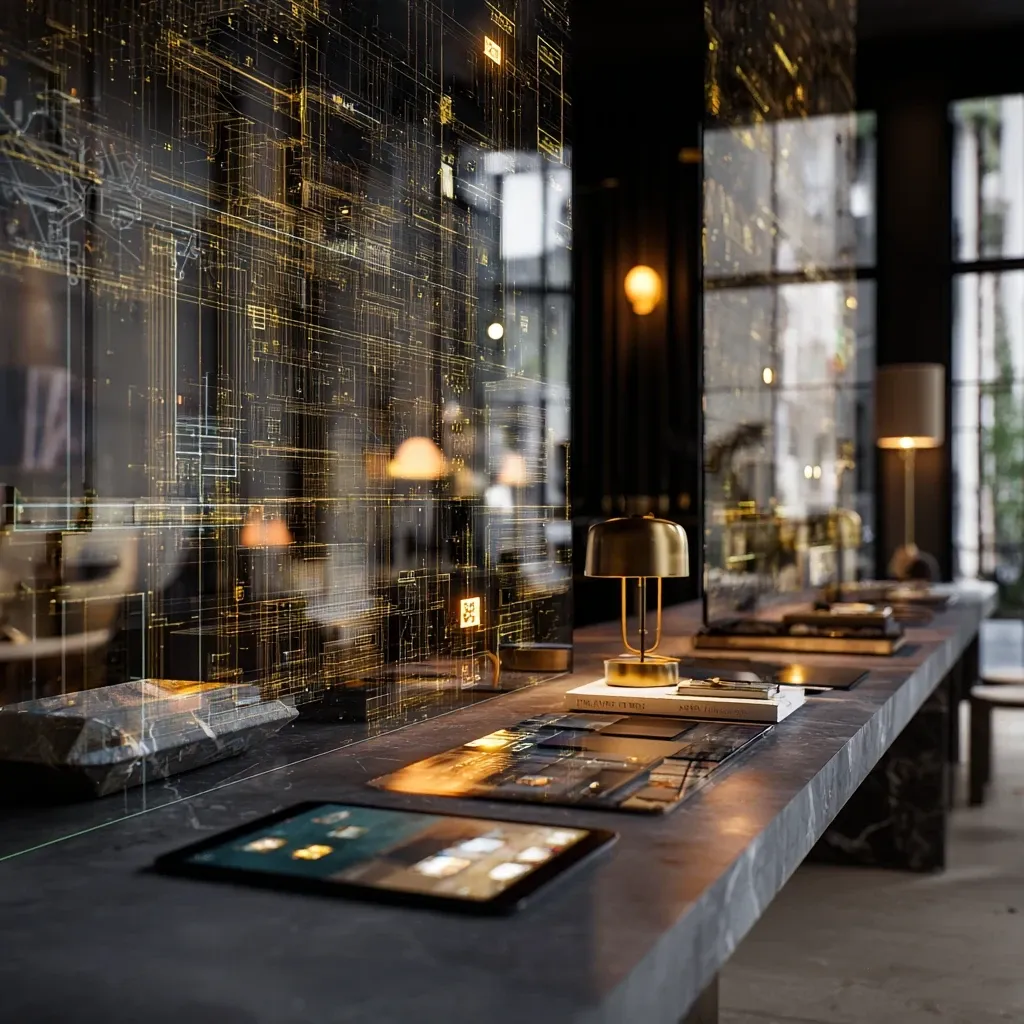
Beyond metrics, the psychological impact of well‑coordinated environments reinforces employee productivity and resident comfort—proof that luxury can be engineered through information discipline.
5. Conclusion
BISTOON Group’s adoption of BIM is an assertion of evolution in Iranian architectural methodology: merging quantitative control with qualitative storytelling.
It modernizes traditional craftsmanship through data transparency, ensuring that each line drawn digitally corresponds to a material, light, and human experience in reality.
Through this symbiosis, the art of renovation becomes the architecture of information.